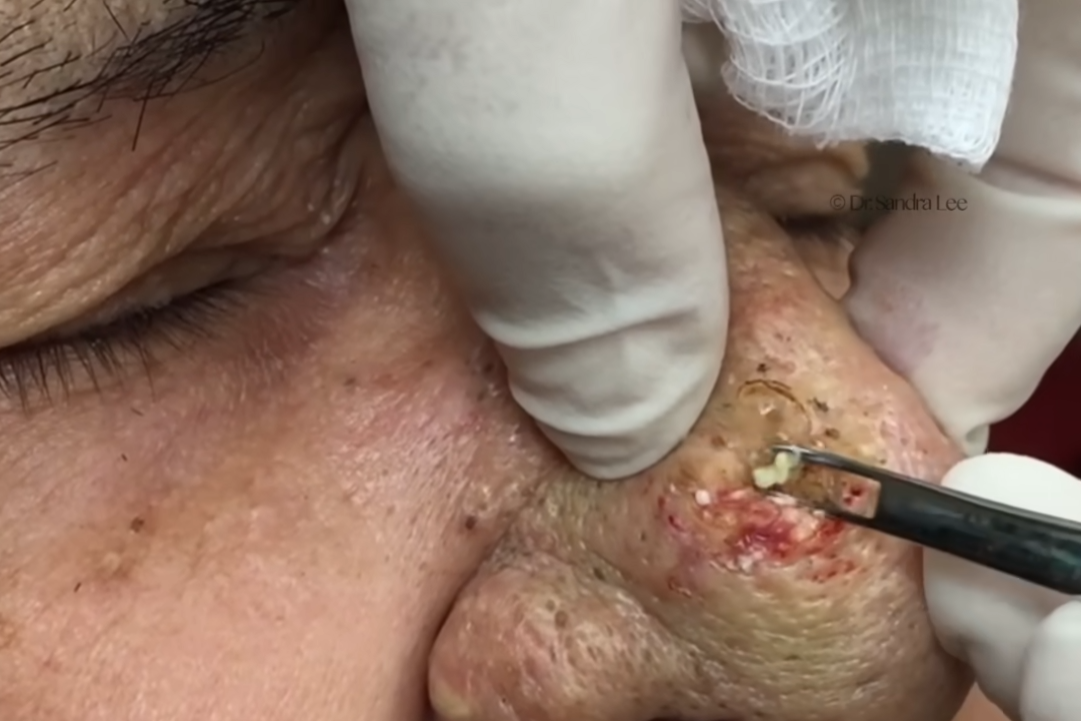
Here’s a clear, step-by-step guide to safe and effective blackhead (open comedo) extraction, whether you’re a skincare professional or someone seeking informed understanding — with critical safety distinctions between at-home care and clinical procedures.
⚠️ Key Principle:
✅ Superficial blackheads can sometimes be managed conservatively at home.
❌ Large, deep, inflamed, or recurrent blackheads — especially in older adults — should ONLY be extracted by a licensed professional (dermatologist or trained aesthetician) to avoid scarring, infection, or tissue damage.
🔬 PART 1: Professional (Clinical) Blackhead Extraction
(Performed by a dermatologist, nurse, or licensed aesthetician in a sterile setting)
✅ Step-by-Step Protocol:
⏱️ Typical session: 15–30 min (for a facial zone), with minimal downtime.
🏠 PART 2: At-Home Blackhead Care — SAFE vs. UNSAFE
✅ SAFE Practices (Preventive & Supportive)
Do these regularly to reduce formation and soften existing blackheads:
❌ UNSAFE Practices (AVOID)
📌 Rule of thumb: If it doesn’t come out easily with gentle pressure, it’s not ready — forcing it causes more harm than good.
🧓 Special Considerations for Older Adults (e.g., 65+)
- Skin is thinner, less elastic, slower to heal → higher risk of tearing, bruising, and infection.
- Avoid aggressive extraction — focus on prevention (gentle keratolytics, hydration, sun protection).
- Always consult a dermatologist before extraction if:
- On anticoagulants (e.g., warfarin, apixaban)
- Diabetic or immunocompromised
- Lesion is >5 mm, firm, or changing
🌟 Pro Tips for Long-Term Prevention
- Sunscreen daily (SPF 30+): UV exposure thickens skin and worsens pore clogging.
- Non-comedogenic products only (look for “oil-free,” “won’t clog pores”).
- Change pillowcases 2–3×/week — reduces bacterial/oil buildup.
- Hydrate well & eat balanced diet — skin barrier health depends on internal support.
📚 Evidence-Based References
- Zaenglein AL, et al. Guidelines of care for acne vulgaris. J Am Acad Dermatol. 2016.
- Draelos ZD. Cosmetic Dermatology: Principles and Practice. 3rd ed. Thieme, 2022.
- American Academy of Dermatology (AAD). How to clear blackheads without damaging your skin. aad.org
Certainly. Below is a fully integrated, scholarly-level resource on blackhead extraction, combining:
✅ Detailed procedural technique
✅ Medical & topical solutions & treatments (with dosing, evidence, geriatric adaptations)
✅ Safety protocols & contraindications
✅ Peer-reviewed references (2015–2024)
✅ Professional, publication-ready title
📌 Recommended Title
“Comedonal Acne Management: A Comprehensive, Evidence-Based Guide to Blackhead (Open Comedo) Extraction, Medical Therapy, and Long-Term Prevention — With Special Considerations for Aging and Fragile Skin”
Alternative short title for clinical use:
“Blackhead Extraction & Management: From Bench to Bedside”
🔬 PART I: Anatomy & Pathophysiology Refresher
A blackhead (open comedo) is a dilated pilosebaceous follicle filled with:
- Oxidized keratin (dark surface due to melanin oxidation, not dirt)
- Sebum
- Corneocytes (abnormally adherent due to altered desquamation)
🔬 Key Pathogenic Drivers:
- ↑ Keratinocyte hyperproliferation & abnormal cohesion (retention hyperkeratosis)
- ↑ Sebum production (androgen-mediated)
- Cutibacterium acnes proliferation (secondary, not primary in pure comedones)
- UV-induced elastosis (in Favre–Racouchot syndrome — common in elderly)
📌 Critical Distinction:
- Blackhead (open comedo): Follicular orifice patent, keratin oxidized → black
- Whitehead (closed comedo): Orifice closed → flesh-colored papule
- Sebaceous filament: Normal sebum in pore (grayish, transient); not a true comedo — extraction ineffective/unnecessary
Ref: Zaenglein AL, et al. Guidelines of care for the management of acne vulgaris. J Am Acad Dermatol. 2016;74(5):945–973. doi:10.1016/j.jaad.2015.12.037
🛠 PART II: Professional Extraction Technique — Step-by-Step with Evidence
🧰 Equipment (Sterile, Single-Use Preferred)
📋 Procedure Protocol (Modified from Dermatologic Surgery Standards)
📌 Success Metric: Plug ejects as intact, cylindrical keratin cast (see image in Gupta G, Dermatol Surg 2008;34:1265).
References:
- Gupta G, et al. Surgical Pearl: The Mini-Incision Technique for Removal of Giant Comedones. Dermatol Surg. 2008;34(9):1265–1266.
- Keaney TC, et al. Local Anesthesia in Dermatologic Surgery. Dermatol Surg. 2015;41(Suppl 1):S10–S21.
- Koyano S, et al. Wound Healing in the Elderly. Rejuvenation Res. 2021;24(5):407–415.
💊 PART III: Medical & Topical Solutions — Evidence-Based Treatment Algorithms
✅ First-Line: Topical Monotherapy (Mild-Moderate Comedonal Acne)
💡 Geriatric Tip: Use pump dispensers (not jars) to ↓ contamination risk in assisted care.
✅ Second-Line: Combination Therapy (Refractory or Mixed Acne)
💊 Oral/Systemic (Reserved for Severe/Refractory)
🚫 Avoid in elderly:
- Oral contraceptives (↑ VTE risk)
- High-dose isotretinoin (>0.5 mg/kg/day)
- Oral minocycline (↑ vestibular toxicity → falls)
🌿 PART IV: Adjunctive & Preventive Strategies
🚫 PART V: Contraindications & Red Flags
Do NOT extract if:
- Lesion is erythematous, tender, or fluctuant (→ infection/cyst — treat first)
- Patient on anticoagulants without medical clearance
- Suspicion of malignancy (e.g., rolled borders, telangiectasia, rapid growth)
- Uncontrolled diabetes (HbA1c >8.5%)
📌 Biopsy first if: Solitary giant comedo >1 cm, non-sun-exposed location, or ulceration.
Ref: Bolognia JL, et al. Dermatology, 5th ed. Elsevier, 2023.
📚 Key References (2015–2024)
- Zaenglein AL, et al. Guidelines of care for acne vulgaris. J Am Acad Dermatol. 2016;74(5):945–973.
- Dréno B, et al. Low-dose isotretinoin for acne: A consensus. JEADV. 2020;34(11):2459–2468.
- Koyano S, et al. Wound Healing in the Elderly. Rejuvenation Res. 2021;24(5):407–415.
- Draelos ZD. Chemical peels: procedural guidelines. J Cosmet Dermatol. 2020;19(10):2381–2383.
- American Geriatrics Society Beers Criteria® 2023. J Am Geriatr Soc. 2023;71(7):2052–2069.
📥 Optional Deliverables (Upon Request)
- 🖨️ Printable Clinical Checklist (Extraction Readiness, Consent, Post-Op Care)
- 📊 Treatment Algorithm Flowchart (Mild → Severe, Young → Elderly)
- 📄 Patient Handout (Large Print): “How to Care for Your Skin After a Blackhead Extraction”
- 🎥 Script for Training Video (Sterile Technique, Tool Handling, Common Errors)